
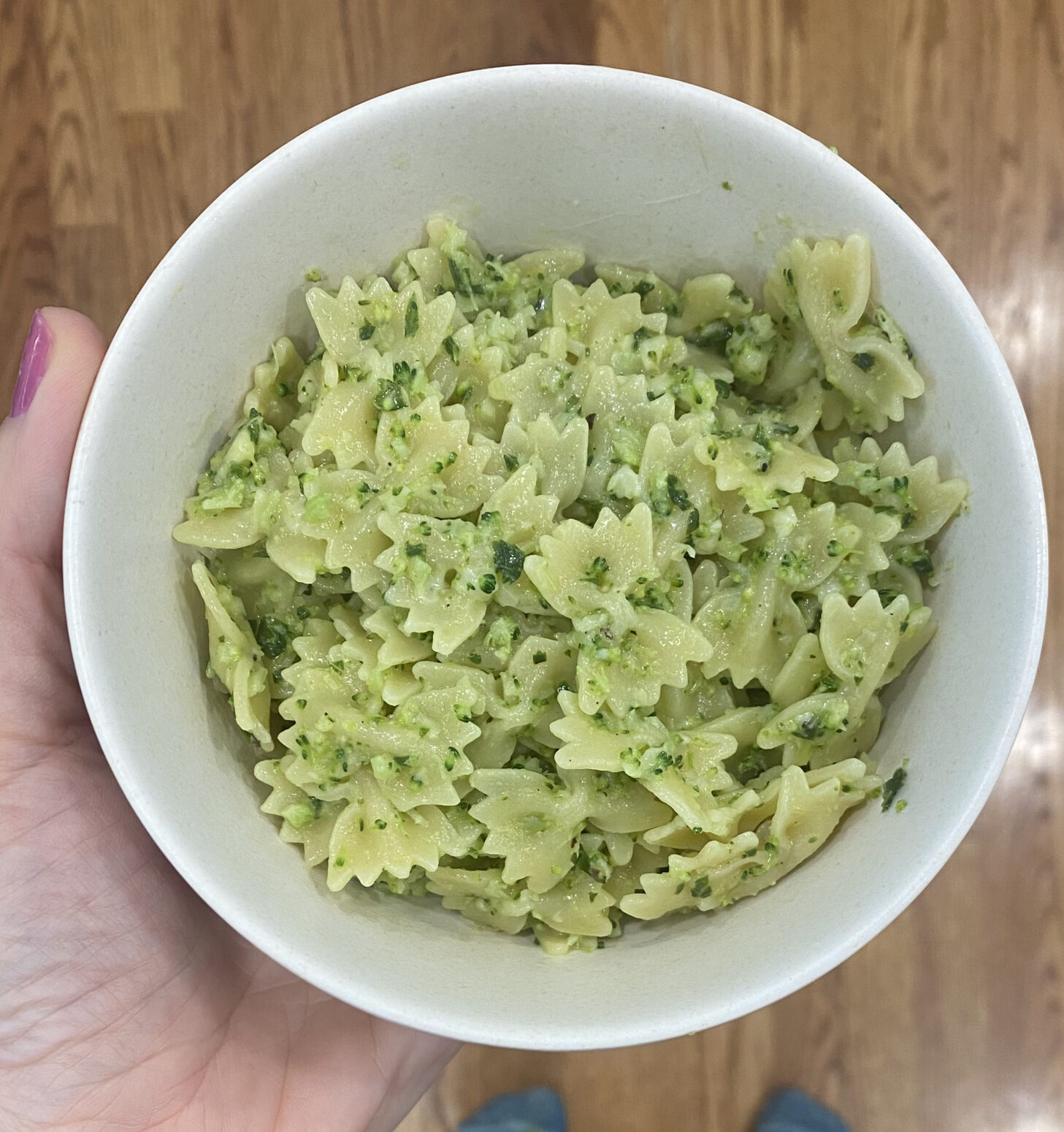
This Broccoli Pesto Pasta is an extra-nutritious take on the traditional pesto recipe. The broccoli provides calcium, vitamin C, and vitamin K while the nutritional yeast is a great source of vitamin B12. Our kids love this simple, healthy pasta recipe!
When Whitney and I first started Plant-Based Juniors, we knew we wanted to create an inclusive community that focused on getting MORE plants on the plate for ALL kids. When talking with parents, one of the most common questions we get is— how can I get my kids to like more vegetables?
As dietitians, we don’t believe in hiding vegetables but we also know that serving them along with highly appealing foods, like pasta, can make them more acceptable to kids.
When developing our brand new course, Plant-Based Nutrition for Kids: Your A to Z Guide, we knew we wanted a strong culinary component, to show you exactly HOW to take all of the nutrition information and start implementing it right away. It’s why we included so many handouts, including a 30-recipe ebook, no-recipe meal ideas, snack lists, food guide and more.
Our nutrition course is created with award-winning pediatrician Dr. Reshma Shah, this course is jam packed with hours and hours of interactive learning. And, because you get lifetime access as long as the course is hosted, you can continue to come back to learn at your own pace, and reference it as your kids grow.
The nutrition information covers infancy all the way through the teen years. Learn more here.
Why We Love This Recipe
One of our goals when creating our course, Plant-Based Nutrition for Kids: Your A to Z Guide, was to give you practical tools and recipes you could start implementing right away. This Broccoli Pesto Pasta, featured in the 30-recipe ebook that accompanies the course, is a simple, yet nutritionally-dense recipe that checks so many boxes.
One of the things you will learn about in our course is our PB3 Plate, which shows you how to create meals from combinations of three categories: grains and starches, fruits and vegetables, and legumes, nuts, and seeds. Our PB3 plate also prioritizes incorporating foods with vitamin C, calcium, and friendly fats.
Broccoli contains a healthy dose of vitamin C and calcium, while the olive oil provides healthy fats, and the pasta provides the starch kids need to feel full. For added iron, you could use legume pasta and hit all the categories at once with a single recipe. Pair this recipe with some strawberries (vitamin C) and perhaps another kid-friendly food like sweet potato fries (starch, vitamin A, fiber), and you’re sure to have a hit.
Want to save this recipe?
Enter your email and get it sent to your inbox! Plus, we’ll send you our free 5-day mini-course on Pediatric Nutrition!
Broccoli Pesto Pasta
Ingredients
- 1 heaping cup of broccoli florets (blanched)
- 1/2 cup fresh basil (or parsley)
- 1/3 cup extra virgin olive oil
- 1 Tablespoon nutritional yeast
- 1 teaspoon lemon zest
- 2 Tablespoons lemon juice
- 2 garlic cloves
- 1/2 teaspoon salt
- 1/4 teaspoon pepper
- 8 ounces cooked pasta or other grains
Instructions
- Blanch broccoli florets for 30 seconds, then place in ice water.1 heaping cup of broccoli florets
- Drain and place in a food processor along with basil (or parsley), extra virgin olive oil, nutritional yeast, lemon zest, lemon juice, garlic cloves, salt and pepper.1/2 cup fresh basil (or parsley), 1/3 cup extra virgin olive oil, 1 Tablespoon nutritional yeast, 1 teaspoon lemon zest, 2 Tablespoons lemon juice, 2 garlic cloves, 1/2 teaspoon salt, 1/4 teaspoon pepper
- Pulse until combined and desired texture is reached.
- Toss with 8 ounces of cooked pasta or other grains.
Notes
- Nutritional yeast is a safe and nutrient-rich food for most people, including kids. But there are certain groups that may need to avoid nutritional yeast or choose unfortified varieties. First, if your baby has an MTHFR genetic mutation, we would recommend using unfortified nutritional yeast. This is because fortified versions have had folic acid, the synthetic version of vitamin B9, added to them. Having the MTHFR mutation causes an impaired folic acid metabolism. Kids who have a yeast allergy may also want to avoid nutritional yeast, just to err on the side of caution.


