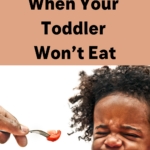
Wondering what to do when a toddler won’t eat? We’ve been there! Here are 7 of our best tips for navigating this stage.

Hey, mama. We know that one of the most important things on your mind is the health and well-being of your child, and that means prioritizing their nutrition.
But like we always say, it’s only nutrition when it’s eaten. So what do you do when your toddler won’t eat?
Well, first of all, you’re not alone. Toddlers everywhere are refusing their plates right this very moment. Some are probably even tossing food on the floor in protest.
But whether this is a new phase or it’s been going on for longer than you’d like, we know that all you want is for your child to be nourished.
While we can’t make them eat the broccoli for you, we’ve both been there (plenty of time) with our own kiddos.
Here are some of the things we’ve learned, through trial and error, and recommend for parents and caregivers dealing with toddler food refusal.
1. Don’t panic
Toddlers often go through phases of picky eating. This can be a totally normal (albeit challenging) part of their development. Avoid showing frustration, concern, or panic, as projecting your feelings on the situation can create a negative mealtime environment and potentially backfire.
Remain calm and neutral and remember that one meal or even a couple of days of poor intake don’t make or break your child’s health.
2. Offer small portions
Having too much food on their plate can be overwhelming for a toddler. Instead, serve small, manageable portions. You can always offer more if they finish what’s on their plate.
3. Stick to the routine
If you already have a pretty regular mealtime routine in place, stick to it regardless of what your toddler is eating or not eating.
Consistency helps toddlers know when to expect food and helps you keep boundaries around mealtime.
4. Make meals fun
Find ways to make your toddler’s mealtime more fun without being distracting. For example, you could use creative presentations to make food more appealing, like colorful plates, cutting food into fun shapes, or creating food art.
Offer your child opportunities to participate in food play, which can help reduce external pressures around eating and encourage them to try new things. See our post on 15 Food Play Ideas for some guidance.

5. Involve them in the prep work
Kids are often more inclined to eat things when they’ve been involved in the planning and preparation to some degree.
Let your toddler help with simple age-appropriate tasks like collecting ingredients, washing vegetables, or stirring.
6. Offer a variety
It can be helpful to offer your toddler a range of textures, colors, and flavors to encourage exploration and prevent boredom.
Rather than putting all new or “learning-to-like” foods on their plate, include at least 1-2 foods you know they will eat and enjoy. This can help them feel motivated to try something they may not be used to.
7. Don’t force feed or barter
Pressuring or forcing your toddler to eat can lead to negative associations with food and eating, which is the last thing we want.
We’re big fans of Ellyn Satter’s Division of Responsibility in Feeding, which (among other things) says your job as the parent is to provide healthy meals, and your child’s job is to decide what food and how much of it on their plate to eat. That’s it!
Feeding toddlers can be challenging, but don’t let these phases discourage you. You’re doing a great job! Keep offering consistent meals and nutritious options and know that this too shall pass.
(And if you’re ever concerned about your child’s intake or weight gain, always reach out to their pediatrician or dietitian for personalized guidance).
Like this post? Send it straight to your email
Enter your email and get it sent to your inbox! Plus, we’ll send you our free 5-day mini-course on Pediatric Nutrition!
Chime In: What has been helpful to you in times when your toddler is refusing to eat? Share other tips in the comments!
If you found this post helpful, we think you should read these too: